Stump Grinding®
The Stump Goes, the Garden Comes Back
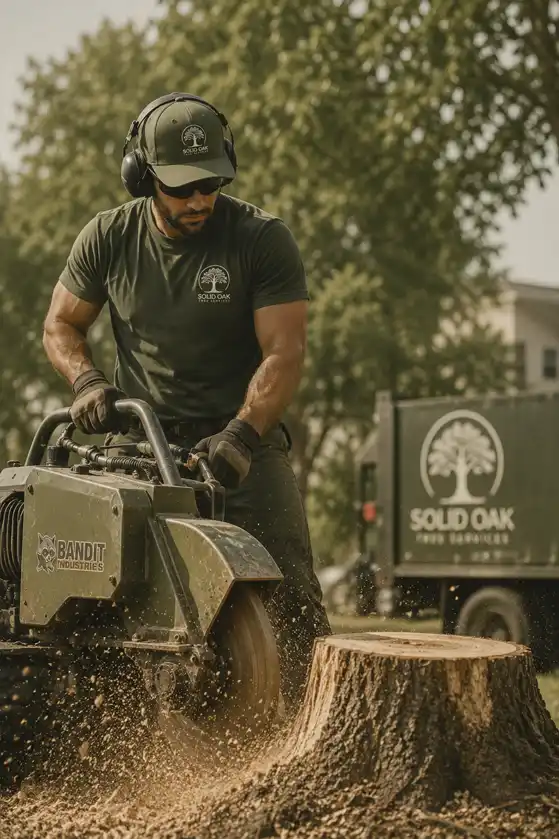
Grinding is the fast, tidy way to be rid of a stump. A carbide wheel chews it down below grade, so it stops regrowing and vanishes under turf.
The machine walks in through a side gate, works in one visit, and leaves a hole you can seed the same week — no digging out the root ball, no ruts across the garden.
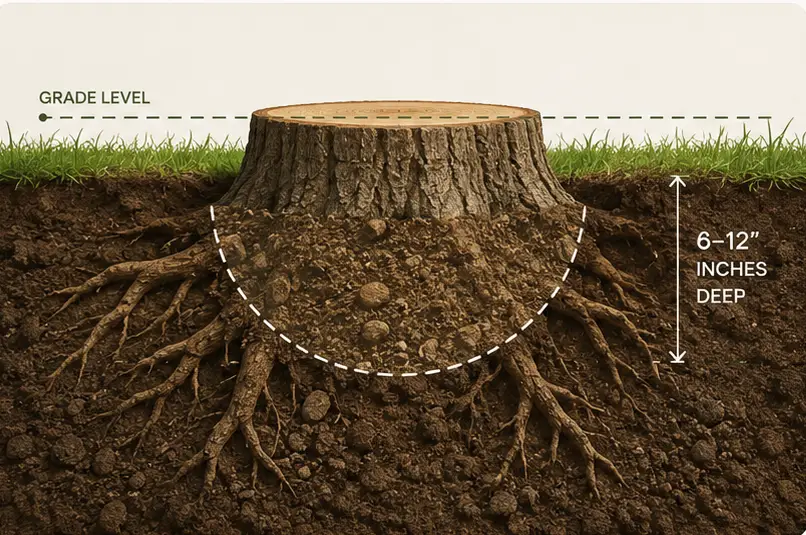
- Ground 6–12in below grade
- Access from 30in wide
- Level and seed-ready
How Deep We Actually Grind
It is not just about what you see — it is about what stays gone.
- Stops regrowth at the source
- Prevents new shoots
- Removes dead root system
- Long-term peace of mind
Depth is the whole job. Anyone can take a stump down to ground level in ten minutes — what happens under the surface is what decides whether it stays gone.
-
Below grade is what stops regrowth
A stump cut flush at ground level can still push shoots from the collar. Taking the wheel 6 to 12 inches under the surface removes the part that sprouts, so nothing comes back.
-
Deeper if you are turfing or planting
Grass needs a few inches of soil to root into, and a bed needs more. Tell us what the space is for and we will grind to suit it rather than to a standard number.
-
The roots break down on their own
Grinding takes the stump, not the whole root system. With the tree gone the remaining roots are dead wood, and they rot away quietly over the following seasons.
What the diagram shows
The stump above the grade line, and the dashed band beneath it where the wheel takes the wood out — 6 to 12 inches under the surface, with the old roots left to break down on either side.
Grinding or Full Removal?
They are different jobs, not better and worse ones. The honest answer depends on one thing: what you intend to do with the ground afterwards.
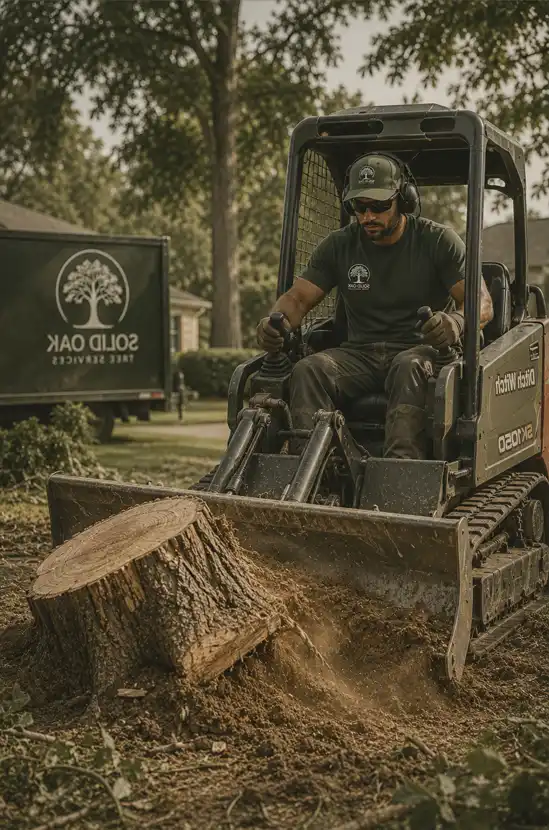
If you are unsure, tell us what the spot is for — lawn, a bed, a patio, a shed base — and we will tell you which job you actually need. Sometimes that is the cheaper one.
What You Get Back
Grinding produces a pile of coarse wood chip and a hole where the stump used to be. What happens to both is your call — tell us before we start.
Hauled away
The chips leave with us and you are left with a clean hole ready for topsoil. Pick this if you want the ground brought back to your own soil level.
Backfilled into the hole
We rake the grindings back in and level them off. It costs nothing, fills the void, and leaves a clean flat surface you can seed straight away.
Kept as mulch
A decent stump makes a barrow or two of coarse chip. If you have beds or paths that could use it, say so and we will leave it stacked.
And Then the Space Is Yours
A stump is dead ground — you cannot mow it, plant it or walk over it. Once it is gone the corner of the garden goes back into use. How deep we grind depends on what you have in mind for it.
Turf
Backfill, a few inches of topsoil over the top, seed or lay it. Within a season the lawn runs straight through where the stump was.
A planting bed
Grind deeper, take the chips away and bring in good soil. Shrubs and perennials are quite happy near old roots — they simply grow around them.
Paving or a patio
Anything you intend to lay a hard surface over wants the root ball gone as well, not just the stump. That is a removal, not a grind.
See Stump RemovalThe one thing grinding does not do is take the roots. For a lawn, a bed or a bit of open garden that does not matter at all — they rot away on their own. It only matters if you intend to plant a new tree in the exact same spot.
Proudly serving Buffalo & Western New York
Our certified arborists cover communities across the region, arriving fully equipped and on time. If your town is on the list, we are ready to help with removal, pruning, stump grinding, and emergency care.
- Buffalo
- Amherst
- Williamsville
- Cheektowaga
- Clarence
- Tonawanda
- Orchard Park
- Hamburg
- Lancaster
- West Seneca
- East Aurora
- Depew
Stump Grinding Questions
How grinding works, what it leaves behind, and when it is the right choice.
Contact Us-
Well below grade — typically 6 to 12 inches, deeper if you plan to turf or plant over it. That is enough to stop regrowth and get the stump out of sight for good.
-
Grinding is faster, cheaper and less disruptive, and suits most gardens. Choose full removal if you are building, paving or replanting in the same spot, since that takes the root ball too.
-
Your choice — we can haul them away, or backfill the hole with them to leave a clean, level surface ready for seeding.
-
No. Once the stump is ground out the tree cannot regenerate, and the remaining roots break down naturally over the following seasons.